
Earthmoving Glenvale QLD 4350
Expanding residential areas commonly need building pads, driveway bases and coordinated drainage levels.
Send My Site Details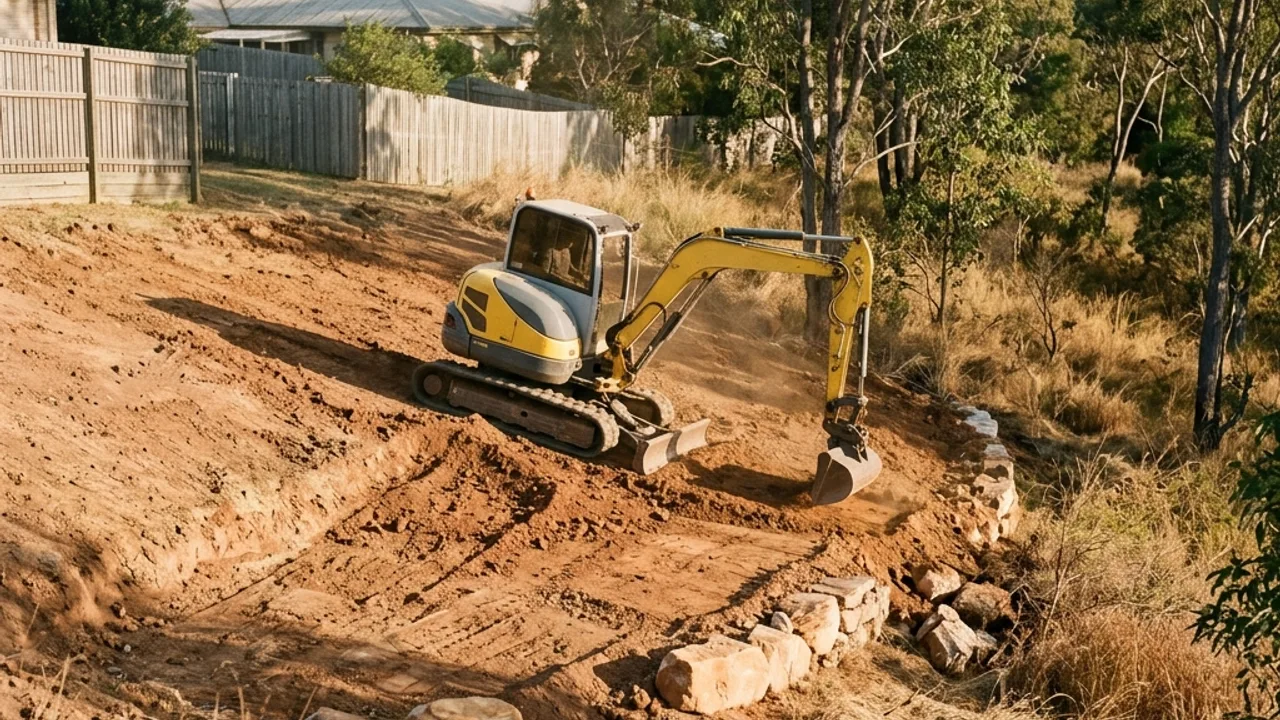
Earthmoving Toowoomba service decisions in Glenvale
A successful Glenvale earthmoving outcome means delivering a precisely formed profile, level, or cleared area, with clear documentation for the next phase of construction. The completion note should explicitly identify achieved levels, detail the disposition of any remaining spoil, and name the party formally accepting the prepared surface, particularly crucial for new building pads or driveway preparations. Decisions about what material streams may stay, be tested, or leave the property must be preceded by a clear description of visibly different excavated materials. The written scope must itemise mobilisation, attachments, operator time, loading, transport, disposal assumptions, and site protection. If conditions differ from the brief, a named review point ensures owner and contractor discussion before extra work proceeds.
About Glenvale
Glenvale, a rapidly expanding residential area, often requires earthmoving services for new building pads, driveway bases, and integrated drainage systems. Its growth-corridor characteristics mean projects frequently involve ground shaping for infrastructure. Local reference points like Glenvale State School, the Toowoomba Showgrounds, and Clifford Park Racecourse help orient an enquiry, although precise measurements at the specific address are always fundamental. Access from Glenvale Road, Boundary Street, or Anzac Avenue can vary significantly between developing estates and established sections; therefore, it is vital to show where a loader or tipper can wait without blocking neighbours, pedestrians, or the following trade. Understanding nearby areas such as Harristown, Cotswold Hills, and Wellcamp assists with logistics, especially for coordinated material delivery or export.
Local excavation context for Glenvale
In Glenvale's expanding residential zones, projects benefit greatly from survey-led cuts, protected access routes, and a clearly defined handoff to subsequent trades. Decisions about what material streams may stay, be tested, or leave the property must be preceded by a clear description of visibly different excavated materials. Clearly mark all existing structures, utility lines, and any landscaping features or finished surfaces that must remain undisturbed. The project brief should specify where excavated material can be temporarily stockpiled during operations and whether direct truck loading is practical, which is particularly relevant for new builds around Glenvale State School. The right machinery ensures the nominated profile is achieved safely and efficiently within the site’s measured confines.
Before finalising an earthmoving scope in Glenvale, carefully examine how the project addresses design levels, underground services, work zone separation, and material handling. Obtain current essential services information and plan for site-specific locating of any private connections. It is important to record the surface under the access route and nominate what protection or reinstatement the owner expects following project completion. Furthermore, given the growth-area context, explicitly treating wet-weather access and managing runoff as key scope questions is essential, particularly where disturbed ground slopes towards property boundaries. Addressing these aspects upfront prevents unforeseen complications.
As a rapidly expanding residential zone, Glenvale's earthmoving landscape is primarily defined by the creation of new building platforms, driveway bases, and integrated stormwater management systems. Properties here, often in close proximity to new community hubs and landmarks like Glenvale State School, are typically part of master-planned developments or infill projects designed for modern living. This means the earthworks often focus on precision and efficiency, with a strong emphasis on achieving specific design levels for subsequent trades. The ground conditions are generally consistent across new estates, though localised variations in soil type or the presence of older farm infrastructure might be encountered. Access to sites is usually generous, allowing for efficient machine operation and material movement, which contributes to project timelines. The challenge lies in the exact coordination of cuts, fills, and drainage to ensure long-term stability and functionality, particularly as new homes and infrastructure connect into a wider network. To translate this into a focused earthmoving brief, accuracy of information is paramount. The brief should incorporate a detailed site survey or engineering plan showing proposed finished levels for house pads, garage slabs, and driveway subgrades. Clear specifications for compaction requirements for these structural elements are essential, preventing future settlement issues. For drainage, the brief needs to outline the intended flow paths for stormwater, including any swales, pits, or connections to existing estate infrastructure. This ensures water is managed effectively across the property and does not impact adjacent lots or public areas, crucial for a growing suburb. Furthermore, the brief should define protection measures for any established infrastructure, such as newly laid services or adjacent roadworks, during the earthmoving phase. A precise schedule for material delivery or removal, coordinating with other building phases, will enhance efficiency. Highlighting the need for a 'defined next-trade handoff' means specifying the exact condition of the site at the completion of earthworks, ready for plumbers, concretors, or landscapers to commence their work without delay.
Earthmoving services available in Glenvale
Preparing a useful site brief
For an earthmoving request in Glenvale, a dimensioned sketch, comprehensive wide and close-up photographs, and clear target depths or levels are essential preparation. Include any relevant design drawings. Clearly illustrate the approach from Glenvale Road or the property's main frontage to the exact excavation area. A useful quote names exclusions and variation triggers instead of relying on an open-ended machine allowance, providing clarity on potential changes. Define the truck positioning, the maximum footprint for any spoil stockpile, and identify surfaces requiring protection. Specify whether excavated material is intended for reuse, testing, export, or future landscaping. Include Glenvale State School, Toowoomba Showgrounds, Clifford Park Racecourse when they help orient the site notes.