
Soil Removal and Cartage for Toowoomba Sites

Sort, load and transport excavated soil, rubble and other material under stated disposal assumptions. Start with dimensions, access, plans, ground and the intended handoff.

Send My Project Details
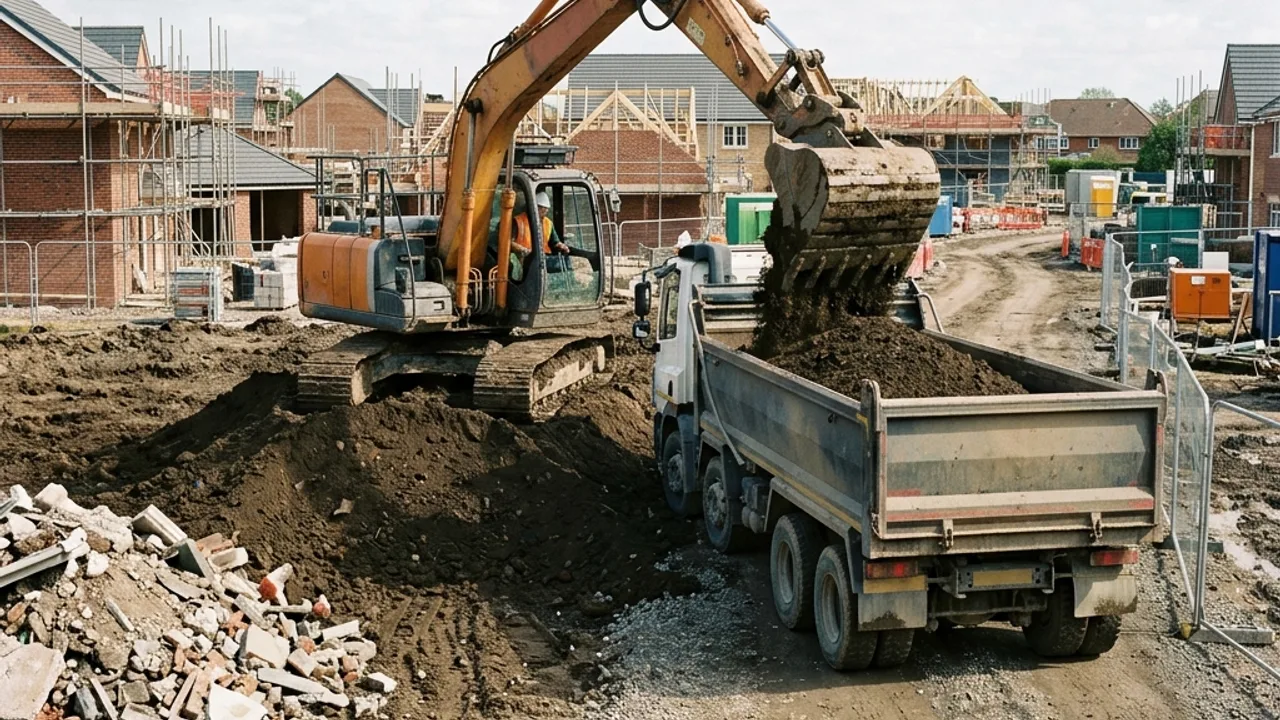
Soil Removal and Cartage earthmoving Toowoomba project

Who this Earthmoving Toowoomba service helps

Soil removal quotes are easier to compare when the material, likely volume, loading access and disposal assumptions are visible. Separated soil, mixed rubble, green waste and suspect material cannot be treated as one interchangeable load.

What the soil removal and cartage scope may include

Material and photo review
Volume and truck-access assessment
Loading and stockpile planning
Suitable fill and rubble separation
Tip-fee and disposal assumptions

Decisions to settle before machinery arrives

Truck movements and disposal can outweigh the digging time on a constrained site. Confirm whether loading, tip fees, waiting time and unexpected material are included before comparing totals. Confirm boundaries, access, underground services, exclusions, site protection, material handling and the point at which another licensed or qualified party takes responsibility.

A practical sequence for this work

  1. 1. Share plans, photos, measurements and the required result.
  2. 2. Review access, services, ground and material assumptions.
  3. 3. Compare a written scope that identifies inclusions and exclusions.
  4. 4. Confirm levels and handoff requirements before work starts.

Why preparation matters for soil removal and cartage

Material class discussed upfront
Truck access assessed separately from machine access
Quote inclusions framed for comparison

Toowoomba site conditions to raise early

Cartage planning turns on material classification, stockpile position and the lawful loading route rather than excavation time alone. Tight inner-suburb streets, variable fill near former industrial land and longer haul paths from range-side sites each change the assumptions that belong in a written Toowoomba removal scope.

Cartage from Toowoomba depends on more than a guessed truck count. State whether the material is natural soil, imported fill, concrete rubble, vegetation or an unknown mixture, and keep those streams separate until disposal assumptions are confirmed. Show where a tipper can stand without blocking a road or damaging a soft verge. Loose-volume expansion, waiting time, tip fees and double handling should be visible line items rather than hidden inside an hourly machine rate.

For soil removal and cartage, compare the named sub-scopes of suitable soil export, rubble separation and haulage, coordinated tipper loading. Ask the provider to mark each one as included, excluded or subject to site confirmation. This keeps the quote tied to the physical result instead of a broad equipment allowance and gives the following trade a clearer point for accepting the ground.

Cartage comparisons need an estimated volume, material description, loading position, truck route and disposal assumption. Excavated cubic metres and trucked loose volume are not interchangeable, so the method for estimating loads should be clear. Ask whether loading time, waiting, tip fees, separation and unexpected material are included. Separated soil, mixed rubble and suspect fill may follow different disposal paths. Keeping each stream separate at the property can reduce confusion and provides a clearer record of what left the site.

Describe your soil removal and cartage needs

Share the details and we will help you take the next step with confidence.

Optional - it helps us point your enquiry the right way.

Your details are only used to arrange your enquiry. See our privacy policy.

Soil Removal and Cartage questions

What changes when rock is found?
Hard material can change the attachment, production rate, vibration controls and disposal plan. A quote should state what ground was assumed and how approval will be obtained before ripping, hammering or larger plant is introduced. Do not treat regional geology as proof of conditions at one address.
Is a mini excavator always best for a narrow yard?
Not necessarily. Compact plant may pass through a restricted route, but reach, lifting capacity, digging depth and spoil transfer still matter. Sometimes a slightly larger machine with direct truck access is more efficient. Select plant after measuring the entire route and required output.
Can earthmoving improve backyard drainage?
Earthmoving can form falls, swales and trenches, but the correct drainage solution may also require hydraulic, plumbing, engineering or planning input. The work must not simply redirect water towards a neighbour. Start with existing flow paths and the approved discharge outcome.
Can excavated soil stay on my property?
It may be reusable when the design allows it and the material is suitable for the intended purpose. Keep topsoil, structural fill, rubble and suspect material separate. Testing, available space, drainage and finished levels can determine whether material remains or must be transported.
How far ahead should earthmoving be booked?
Availability varies with project size, weather and local construction demand. Book after plans, access and preceding approvals are sufficiently clear, then coordinate the date with survey, service locating and the following trade. Avoid promises based on a generic lead time.

Soil Removal and Cartage across Toowoomba

Pick your suburb for the local notes, or submit the form for a free review.

Soil Removal and Cartage in Toowoomba City Inner-city access and buried infrastructure reward measured plant selection and a clear loading plan. Soil Removal and Cartage in Rangeville Range-side grades call for survey control, stable cuts and deliberate stormwater planning. Soil Removal and Cartage in Middle Ridge Established yards need a complete machine route and firm protection plan before excavation starts. Soil Removal and Cartage in Kearneys Spring Changing block layouts make access width, service information and finished levels essential inputs. Soil Removal and Cartage in Darling Heights Varied site scale makes separation of work zones, public access and spoil routes particularly important. Soil Removal and Cartage in Harristown Established improvements and possible fill call for investigation before excavation quantities are fixed. Soil Removal and Cartage in Newtown Narrower residential routes favour compact machinery and staged material handling. Soil Removal and Cartage in Wilsonton Industrial interfaces make truck positioning, work-zone separation and service locating central to planning. Soil Removal and Cartage in Glenvale Growth-area works benefit from survey-led cuts, protected access and a defined next-trade handoff. Soil Removal and Cartage in Drayton Mixed block sizes call for current service information and realistic cartage access. Soil Removal and Cartage in Highfields Larger blocks still need precise levels, drainage review and protection of existing trees and services. Soil Removal and Cartage in Westbrook Open access can improve productivity, but finished levels and downstream drainage remain critical. Soil Removal and Cartage in Gowrie Junction Longer runs make quantity estimates, truck access and erosion control important before mobilisation. Soil Removal and Cartage in Withcott Range approaches require close attention to stable batters, water movement and haul routes. Soil Removal and Cartage in Mount Lofty Steeper access and downhill neighbours make level control, runoff and site protection central to the method.

See all locations ->